
Asbestos Warning Signs Australia
Asbestos signage is one of the areas where WHS law is most specific — Model WHS Regulations Chapter 8 spells out labelling, identification and removal-area signage in unusual detail. This guide maps the requirements to the sign families you actually install.
Last reviewed:
The regulatory framework
- Model WHS Regulations Chapter 8 — Asbestos. The central framework — identification, asbestos register, asbestos management plan, health monitoring, removal licensing, training and disposal. Adopted in NSW, QLD, SA, TAS, ACT, NT, Commonwealth and (with adjustments) WA.
- Codes of Practice. Safe Work Australia publishes two key Codes: How to Manage and Control Asbestos in the Workplace and How to Safely Remove Asbestos. State regulators have adopted these (or equivalents) as approved Codes.
- Victoria. Operates under the OHS Act 2004 and OHS Regulations 2017. The substance is very similar, but wording and licensing paths differ. Check WorkSafe Victoria.
- AS 1319. Provides the visual format — warning (yellow triangle) and danger (red/black header) — that asbestos signs are built around.
The sign families
Identification labels (AS 1319 warning — yellow)
- “Caution — Asbestos” — generic identification of ACM-containing material
- Switchboard / electrical backing board asbestos labels (common legacy application)
- Wall panel / lagging / floor tile location labels for ACM in-situ
- “Presumed Asbestos Containing Material” — where the building is pre-2004 and no inspection has been done
Register & access notices
- “Asbestos Register Held at This Site — Contact [Name]” at site entry / reception
- “Asbestos Management Plan — Available from Site Manager”
- “Contractors must view the Asbestos Register before work commences” at contractor sign-in
Removal area signage (AS 1319 danger — red/black)
- “Danger — Asbestos Removal in Progress — Do Not Enter”
- “Authorised Personnel Only — PPE Required”
- “Asbestos Waste — Do Not Handle” on sealed bagged waste
- “Decontamination Unit” identification at hygiene facility entry/exit
- “Class A Removal” or “Class B Removal” identification (where the licensing status of the removal is relevant)
Do-not-disturb markers (occupied buildings)
- “Do Not Disturb — Contains Asbestos” on plant rooms, service ducts, risers and switchboard enclosures
- “No Drilling / No Cutting — Check Asbestos Register First” notices on walls with known ACM
- Ceiling void access hatches labelled with ACM status (insulation lagging, debris)
Practical checklist — what an asbestos-aware workplace looks like
- Asbestos register held on site, reviewed at least every five years, accessible to workers and contractors
- Asbestos Management Plan written and reviewed regularly
- Register-access notice at site entry / contractor sign-in
- ACM locations labelled (switchboards, eaves, bathroom walls, older floor tiles, lagging)
- Removalists engaged for all work disturbing ACM (Class A or Class B licensed)
- Removal-area signs installed during any removal project
- Clearance certificate before re-occupation
- Workers and contractors inducted on the register and the management plan
Product ranges we manufacture
Warning Signs
AS 1319-styled yellow asbestos-warning triangles for identified ACM, presumed ACM and asbestos-register locations.
Browse range →Danger Signs
Red/black Danger format for active removal areas, exclusion zones and unauthorised-entry prohibition.


Notice Signs
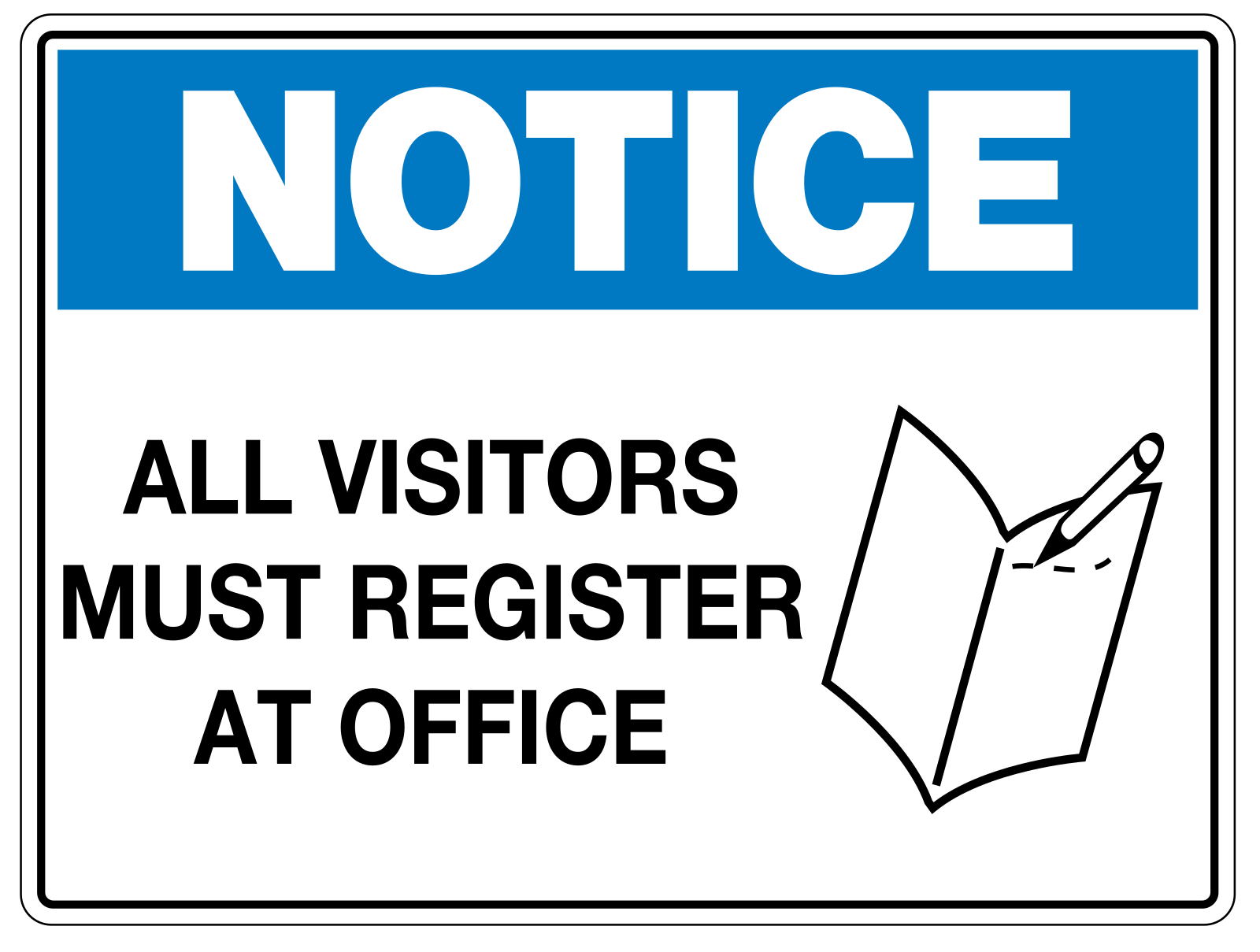
Asbestos register access, property information and 'do not disturb' notices for occupied buildings.
Official references
- Safe Work Australia — How to Manage and Control Asbestos in the Workplace (Code of Practice)
- Safe Work Australia — How to Safely Remove Asbestos (Code of Practice)
- Asbestos and Silica Safety and Eradication Agency (Commonwealth)
- SafeWork NSW — Asbestos, WorkSafe Victoria — Asbestos, WHSQ — Asbestos.
Frequently asked questions
When is an asbestos sign or label required?
Under Model WHS Regulations Chapter 8, a PCBU with management or control of a workplace that has asbestos or asbestos-containing material (ACM) present must ensure the asbestos or ACM is clearly identified, so far as is reasonably practicable, by a label or sign. The practical effect: where asbestos has been identified and remains in place, the location should be marked. For buildings constructed before 1 January 2004, the PCBU is typically required to assume ACM is present unless identified as not present by a competent person.
What is an asbestos register and do I need a sign for it?
Under Chapter 8, a PCBU with management or control of a workplace (built before 1 Jan 2004 or otherwise identified as containing ACM) must prepare and maintain a written asbestos register, make it accessible to workers, contractors and visitors, and update it as needed. A 'Where is the Asbestos Register?' notice at site entry and/or at the site office is standard practice to make the register findable. The register itself isn't a sign — the sign points to the register.
What's the difference between Class A and Class B asbestos removal signage?
Under the Code of Practice for How to Safely Remove Asbestos, Class A licensed removal (friable asbestos, or non-friable asbestos over 10 m²) requires more stringent controls — fully enclosed removal area, negative pressure, full hygiene facility, and heavier signage. Class B (non-friable ACM up to and including 10 m²) has lighter controls but still requires the removal area to be clearly signposted with 'Asbestos Removal in Progress — Do Not Enter' signs. Removal signage typically uses the AS 1319 Danger format (red header, black/white body).
Are asbestos signs the same in every state?
The substance of the requirements is the same in states that have adopted the Model WHS Regulations — NSW, Queensland, South Australia, Tasmania, ACT, Northern Territory and Commonwealth jurisdictions. Western Australia also adopts a version of model WHS. Victoria uses a different framework — the Occupational Health and Safety Regulations 2017 + Asbestos-specific provisions — but the practical sign set is substantially similar. Always check the regulator in your jurisdiction (WorkSafe Victoria, SafeWork NSW, etc.) for state-specific wording preferences.
Can a strata building just put up an 'Asbestos' sign?
Residential strata buildings are in a complex position — common property (corridors, plant rooms, basement, roof void) is a workplace when tradespeople enter, which brings it into WHS scope. Body corporates/strata schemes should commission an asbestos inspection, maintain a register for common areas, and install warning/register-location signage in plant rooms, switchboards and service ducts where ACM has been identified. Individual units (private property) sit outside WHS but fall under state asbestos-disposal laws when renovations occur.
When do asbestos signs need to be removed?
Signs identifying ACM in-situ must remain until the ACM is removed or the register is updated to reflect that it's no longer present. After removal, a clearance inspection by an independent licensed asbestos assessor is required (for Class A removal) before the area can be re-occupied. The temporary removal-area signage comes down once clearance has been issued; the permanent warning signage comes down when the register is updated.
Asbestos sign packs
Caution-Asbestos labels, switchboard ACM labels, register-location notices, removal-area Danger signs, Do Not Disturb markers, asbestos-waste labels and custom asbestos management plan notices. Laminated polypropylene or aluminium for permanent ID, Corflute for temporary removal-area signs.
Planning signage for a specific site? These interactive checklists bring together the sign families covered above alongside the rest of what the workplace typically needs.