
Biosecurity & Farm Gate Signs Australia
Biosecurity law in Australia is a layered framework — the Commonwealth Biosecurity Act 2015 plus a state biosecurity Act in each state. This guide explains how farm gate signage, Biosecurity Management Plans, and visitor entry conditions fit together.
Last reviewed:
The biosecurity framework
- Biosecurity Act 2015 (Cth). Commonwealth-level controls on biosecurity risks entering Australia (imports, international travellers) and national responses to exotic pests and diseases. Administered by the federal Department of Agriculture, Fisheries and Forestry.
- State biosecurity Acts. Each state has its own Act covering biosecurity on land and livestock within the state — NSW Biosecurity Act 2015, QLD Biosecurity Act 2014, Victoria (Livestock Disease Control Act 1994 + Plant Biosecurity Act 2010, with reform in progress), WA (Biosecurity and Agriculture Management Act 2007), SA (various Acts — currently being consolidated),TAS (Biosecurity Act 2019), NT (Livestock Act, Plant Health Act).
- General biosecurity duty. In NSW, QLD and TAS, the state Acts impose a general duty on anyone dealing with biosecurity matter to take reasonable steps to prevent, eliminate or minimise biosecurity risk — farm gate signage and visitor controls are one of the primary ways a landholder discharges this duty.
NSW — Biosecurity Management Plans (BMPs)
Under section 22 of the NSW Biosecurity Act 2015, a landholder may prepare a Biosecurity Management Plan for the property. When a BMP is in place and a sign is displayed at each entry point notifying visitors of the plan’s conditions, a person entering against those conditions can be prosecuted under the Act (e.g. entry without permission, failure to clean vehicles, bringing prohibited matter onto the property).
Typical NSW BMP gate sign content:
- Headline: “Biosecurity Risk — Do Not Enter” or “Biosecurity Area”
- “A Biosecurity Management Plan is in effect”
- Conditions of entry (report to office, clean vehicles, no livestock contact without permission)
- Contact phone number for the landholder / manager
- Reference to the Biosecurity Act 2015 (NSW) section 22
QLD — Farm gate entry signs
Queensland’s Biosecurity Act 2014 operates a listed-matter framework: invasive plants and animals are categorised as Restricted Matter (Categories 1-7) or Prohibited Matter, each triggering specific duties (notification, control, containment, disposal). Farm gate signs in QLD typically reference the general biosecurity obligation and the property’s status for specific pests/diseases (cattle tick zones, fire ant restricted areas etc.). Template content is available from the QLD Department of Agriculture and Fisheries.
Victoria — livestock and plant biosecurity
Victoria currently operates under two separate Acts — Livestock Disease Control Act 1994 (animals) and Plant Biosecurity Act 2010 (plants). A consolidated Biosecurity Act is in development. Farm gate signage in Victoria commonly covers Property Identification Code (PIC) display, livestock-movement requirements, and entry conditions under the general biosecurity framework administered by Agriculture Victoria.
Vineyards — phylloxera zone signage
Grapevine phylloxera (Daktulosphaira vitifoliae) is Australia’s most consequential grapevine pest. Nationally, vineyards operate in three zones: Phylloxera Infested Zones (PIZ), Phylloxera Exclusion Zones (PEZ) and Phylloxera Risk Zones (PRZ). Each zone triggers specific entry controls: mandatory vehicle/machinery washdown, movement permits, visitor footwear disinfection. Gate signs identify the zone status and list entry conditions; enforcement is by state agriculture departments.
Common farm gate sign families
- BMP gate signs (NSW-styled and generic)
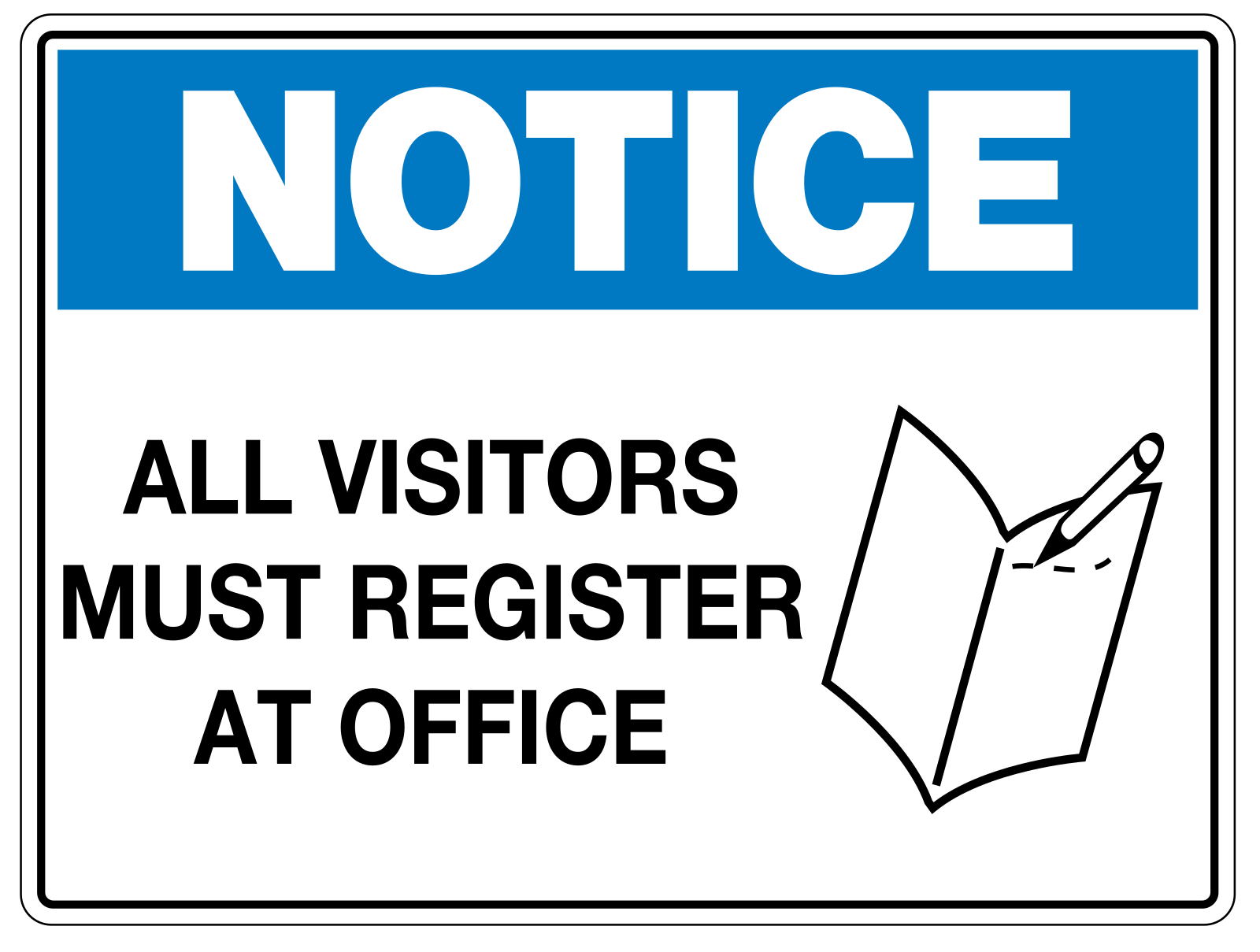
- “Visitors report to office” direction signs
- Vehicle washdown station signs
- Quarantine area signs (for isolated livestock or plants)
- Chemical spray warning signs (with re-entry interval)
- Property Identification Code (PIC) display signs for stock properties
- Dam/water safety signs (not biosecurity, but commonly installed together)
- “No trespassing” and property boundary markers
Enforcement — who to talk to
- Federal: Department of Agriculture, Fisheries and Forestry — imports, international travellers, national disease responses.
- NSW: NSW DPI — Biosecurity + Local Land Services for rural landholders.
- QLD: Queensland DAF — Biosecurity.
- VIC: Agriculture Victoria — Biosecurity.
- WA: DPIRD Western Australia.
- SA / TAS / NT: see each state/territory agriculture department.
Product ranges we manufacture
Biosecurity Signs
Biosecurity Management Plan (BMP) gate signs, no-entry biosecurity, livestock & property identification.


Environmental & Farm Signs
Farm boundary, property identification, chemical spray, dam and waterway biosecurity signs.


Notice Signs
Visitor sign-in, quarantine, vehicle washdown and general farm-notice signage.
Official references
- Biosecurity Act 2015 (Cth)
- NSW Biosecurity Act 2015 (incl. s.22 Biosecurity Management Plans)
- QLD Biosecurity Act 2014
- Outbreak.gov.au — national disease and pest response information
Frequently asked questions
What is a Biosecurity Management Plan (BMP) sign?
In NSW, a Biosecurity Management Plan is a written plan under the Biosecurity Act 2015 (NSW) that a landholder can prepare to manage biosecurity risks on their property. When a BMP sign is displayed at the property boundary and entry points, and the conditions of entry are brought to the attention of visitors, a visitor who enters against those conditions can be prosecuted. The typical BMP gate sign says 'Biosecurity Risk — Do Not Enter' with contact details and conditions of entry (e.g. clean vehicles, no unauthorised access to livestock or crops). Displaying the sign is voluntary but strongly recommended for properties with significant biosecurity risks.
Is a biosecurity sign legally required at a farm gate?
Under the Commonwealth Biosecurity Act 2015, landholders have a general biosecurity duty — a duty to take reasonable steps to prevent, eliminate or minimise biosecurity risks. State laws (e.g. NSW Biosecurity Act 2015, QLD Biosecurity Act 2014, Victorian Livestock Disease Control Act) reinforce this. Signs are typically not prescribed as the specific compliance mechanism — but they're the primary way landholders discharge their duty to notify visitors of entry conditions, support their BMP (in NSW), and reduce the likelihood of disease transfer. In short: not specifically mandated, but a practical and widely expected control.
What's different about biosecurity in Queensland?
Queensland's Biosecurity Act 2014 uses a slightly different framework — it includes prevention and response regimes for listed pests and diseases (including restricted matter categories 1-7), and QLD-specific farm gate signage usually references these. QLD farmers typically use entry-management signs that note the property's biosecurity status, the contact person, and entry conditions. The QLD Department of Agriculture and Fisheries publishes recommended gate-sign templates.
Do vineyards need phylloxera signage?
Vineyards in established Phylloxera Infested Zones (PIZ), Phylloxera Exclusion Zones (PEZ) and Phylloxera Risk Zones (PRZ) have specific obligations under state plant health legislation and the National Phylloxera Management Protocol. Entry signs identifying the zone status, mandatory vehicle washdown, and required movement permits are standard at vineyard gates. These obligations are enforced by state agriculture departments (Agriculture Victoria, DPI NSW etc.).
What should a farm visitor sign-in sheet include?
A practical visitor record supports the landholder's biosecurity duty and provides a trace in the event of a disease incident. Minimum fields: visitor name, company, vehicle registration, date and time in/out, last property visited, purpose of visit, and acknowledgement of entry conditions (vehicle cleanliness, no unauthorised livestock contact, PPE/footwear protocol). Many BMPs reference a standard sign-in sheet — templates are available from state DPIs.
Are biosecurity signs just for large farms?
No. Smaller lifestyle and hobby-farm blocks carry biosecurity risk too — fruit flies, myrtle rust, livestock diseases and weed species don't distinguish by farm size. Any property that runs livestock, grows produce commercially, hosts agritourism visitors, or borders a larger commercial property benefits from clear biosecurity signage. Signs also help protect the landholder legally by putting visitors on notice of entry conditions.
Farm gate & biosecurity sign packs
NSW BMP gate signs, QLD biosecurity entry signs, PIC display, vehicle washdown, visitor sign-in notices and custom farm gate signs. Aluminium or Corflute — weatherproof for outdoor gate mounting.
Planning signage for a specific site? These interactive checklists bring together the sign families covered above alongside the rest of what the workplace typically needs.